- Phone: (031) 849 5566
- WA: +6282140060234
- Email: [email protected]
- Hours: Mon-Fri, 8am - 5pm
Business Operations Optimization through ERP Implementation
In today’s digital era, companies must manage operations efficiently, in an integrated manner, and based on data. However, many organizations still face challenges such as disconnected systems across divisions, duplicated work, and limited data visibility. To address these issues, implementing an ERP system has become an increasingly relevant solution.
What Is ERP and Why Does It Matter?
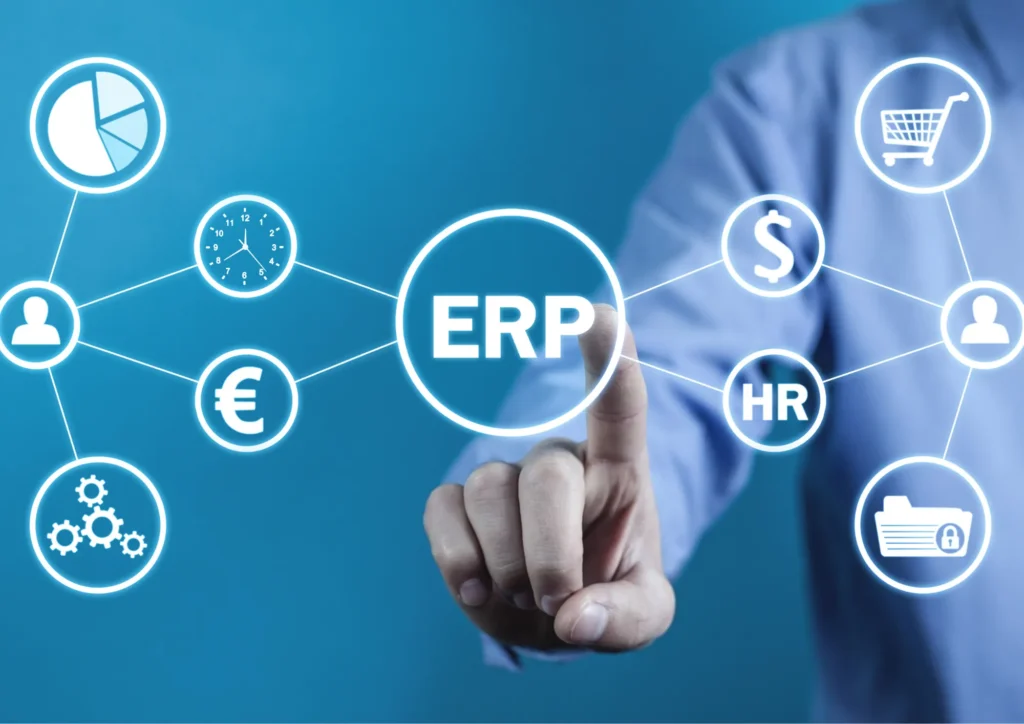
ERP (Enterprise Resource Planning) is a software system designed to integrate various business functions into a single unified platform. These functions include finance, operations, sales, procurement, human resources, and inventory management.
With ERP, companies store all data within a centralized system, enabling each department to access the same information in real time. As a result, organizations can improve efficiency, reduce manual errors, and accelerate decision-making.
Without ERP, companies tend to rely on separate applications that do not communicate with each other. Consequently, data reconciliation becomes more complex and increases the risk of inconsistencies. Therefore, implementing this system represents a strategic step to support sustainable business growth.
ERP Implementation Approaches
In general, companies can implement an ERP system through two main approaches: standard (off-the-shelf) ERP and customized ERP. The appropriate approach depends on the complexity of business processes and the level of integration required.
1) Standard ERP
Standard ERP refers to pre-built systems designed for broad use across many companies with relatively common business processes. These systems typically provide core modules such as finance, sales, purchasing, inventory, and HR, which can be used with basic configuration. The main advantages are faster implementation, more predictable costs, and ongoing vendor support. However, customization is usually limited, so the company often needs to adjust some internal processes to align with the system’s standard workflows.
Examples: Accurate, Xero (primarily for accounting and standard business processes for small to medium-sized businesses).
2) Customized ERP
Customized ERP refers to an ERP implementation that involves deeper tailoring to a company’s specific needs—through advanced configuration, development of additional features, and/or integration with other systems. This approach is suitable for complex operations (e.g., manufacturing, project-based/construction businesses, multi-warehouse, multi-entity environments) that require detailed workflow control. Its key advantage is a closer fit with the company’s operations. However, it typically requires a longer implementation timeline, more intensive analysis and solution design, and higher development and maintenance costs.
Common platforms used for this approach: Odoo (modular and highly customizable), SAP (enterprise ERP with extensive configuration options and support for add-ons/integrations).
Also Read: Understanding Odoo: An Integrated ERP Solution for Business Efficiency and Digital Transformation
Challenges in ERP Implementation
While ERP offers significant benefits, companies often face several challenges during implementation, including:
- Misalignment between the system and existing business processes
- Poor data quality and lack of data standardization
- User resistance due to changes in working methods
- Limited system understanding, leading to underutilized features
- Insufficient planning and implementation strategy
Therefore, organizations must address these challenges through a structured approach and adequate support to ensure effective and optimal implementation outcomes.
The Role of Business Consultants
ERP implementation represents an operational transformation process that goes beyond technology and directly impacts business processes. Without proper guidance, these challenges can hinder overall success.
At this stage, consultants play a critical role in ensuring that companies implement ERP effectively and align it with operational needs. As an information systems consultant, PT Synergy Ultima Nobilus (PT SUN) provides ERP implementation services with a practical, systematic, and business-oriented approach.
Business Process Mapping and System Requirements
PT SUN conducts comprehensive business process mapping across all company functions, including finance, sales, purchasing, and operations. Through this process, the team identifies gaps between current workflows and system requirements. As a result, the analysis serves as a foundation for configuring a system that aligns with the company’s actual conditions.
System Configuration and Data Preparation
PT SUN configures the system based on the business process mapping results. This step includes setting up account structures, master data, approval workflows, and other operational parameters. In addition, PT SUN supports data preparation to ensure smooth migration into the system. Consequently, consistent and well-structured data enhances operational effectiveness.
Also Read: The Strategic Role of Flowcharts in Accounting Information System Design
User Support and System Optimization
PT SUN provides continuous support to users in their daily operations. This support includes system training, issue resolution, and workflow adjustments. Furthermore, the team conducts regular evaluations to ensure the system operates effectively. Ultimately, this approach helps companies achieve sustained improvements in operational efficiency.
Contact us for further consultation!