- Phone: (031) 849 5566
- WA: +6282140060234
- Email: [email protected]
- Hours: Mon-Fri, 8am - 5pm
The Strategic Role of Flowcharts in Accounting Information System Design
In an increasingly digitalized business landscape, many organizations invest heavily in various technology solutions to strengthen their financial systems. However, these investments are not always accompanied by a sufficient understanding of the underlying business processes. As a result, the systems developed often fail to reach their full potential. In this context, flowcharts play a far more strategic role than merely serving as visual tools.
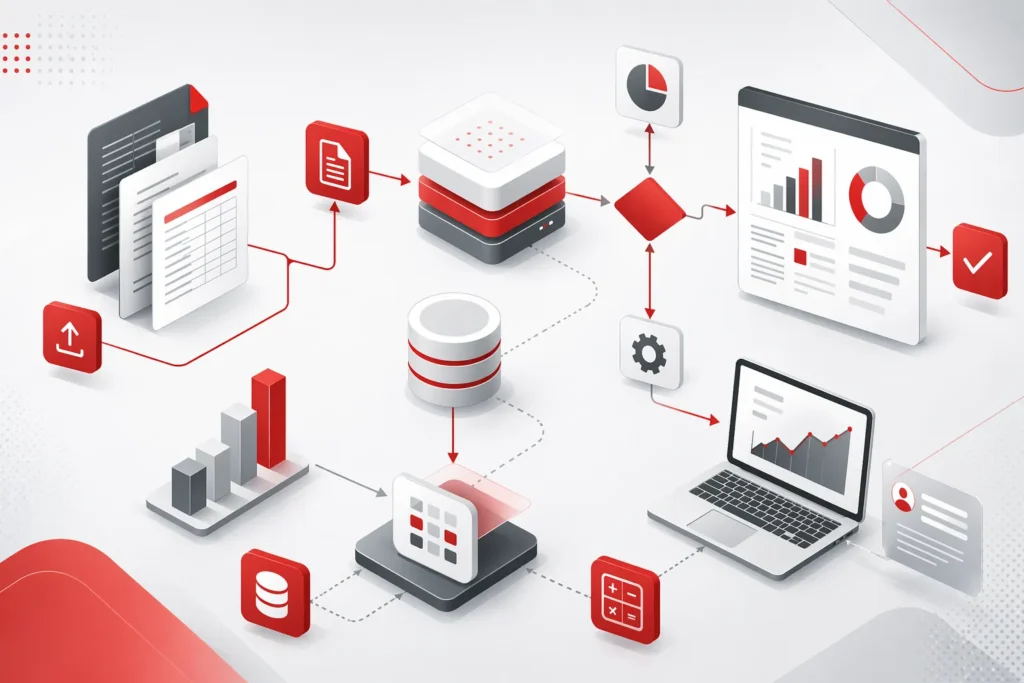
Flowcharts in Accounting Information Systems
A flowchart is a graphical representation that maps the flow of processes, data, and documents within a system using standardized symbols. According to Romney and Steinbart (2012), a flowchart is an analytical technique used to explain aspects of an information system in a clear, concise, and logical manner. In accounting information systems, organizations use flowcharts to illustrate how transactions are processed, from initial recording to the generation of financial reports used by management.
This visual approach enables cross-functional teams within an organization to gain a comprehensive understanding of the system. Moreover, it simplifies complex processes, making them easier to analyze, evaluate, and improve. In addition, flowcharts serve as critical formal documentation, supporting operational needs, audit requirements, and future system development.
Types and Components of Flowcharts
To better understand their practical application, it is essential to recognize the types of flowcharts and their core components. This understanding ensures that flowcharts function not only as process representations but also as effective cross-functional analytical tools.
- Document Flow
This type illustrates the movement of documents across organizational units, whether in physical or digital form. Consequently, it facilitates the tracking of information distribution. - System Flow
This type depicts the relationship between inputs, processes, and outputs within a system, including integration with applications and databases. - Program Flow
This type focuses on programming logic and is typically used by technology teams for system development and analysis.
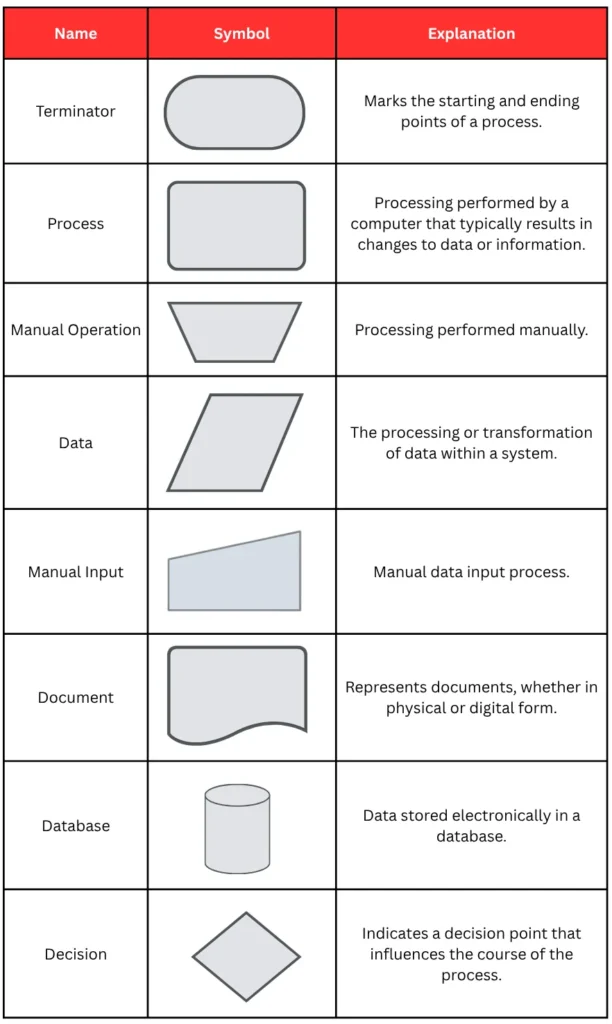
With a clear and consistent structure, flowcharts become easier for stakeholders to interpret. As a result, they enhance communication and improve process clarity across the organization.
Also Read: Understanding Odoo: An Integrated ERP Solution for Business Efficiency and Digital Transformation
The Role of Flowcharts in System Design
During the design phase of accounting information systems, flowcharts function as conceptual tools that translate business requirements into structured system designs. Furthermore, they not only represent current processes but also serve as a foundation for designing more efficient and scalable future workflows.
Through flowcharts, organizations can systematically identify transaction flows, including control points and cross-functional interactions. Therefore, they help ensure that the system design achieves both operational efficiency and strong internal control principles.
In addition, flowcharts enable organizations to define technology requirements with greater precision. With clear visibility into process flows, companies can identify areas that require automation or system integration, an essential step in implementing solutions such as ERP systems and broader digital transformation initiatives.
Equally important, flowcharts bridge collaboration between business and technology teams. Standardized visualizations allow both sides to align their understanding before implementation, thereby minimizing the risk of miscommunication.
Also Read: The Importance of Understanding Direct and Indirect Cost in Business
The Role of Consultants in System Design
In today’s digital business environment, designing an effective accounting information system has become a critical priority for organizations. Increasing process complexity and the need for technology integration demand a structured and strategic approach. At the same time, misalignment between systems and operational needs can significantly hinder organizational performance. In this context, consultants act as strategic partners. They help ensure that system designs align with business needs while also improving efficiency and the quality of information generated.
PT Synergy Ultima Nobilus (PT SUN) has supported numerous organizations in designing and developing integrated information systems. By leveraging a systematic and best-practice-driven approach, PT SUN delivers services designed to help companies build reliable and adaptive systems, including:
Business Requirement Identification
PT SUN assists organizations in comprehensively identifying business requirements. This process includes mapping existing business processes and identifying underlying issues. As a result, PT SUN ensures that system designs effectively capture user needs.
System Architecture Design & Integration
PT SUN designs system architectures tailored to organizational requirements. This includes defining system structures, selecting appropriate technologies, and integrating various modules. Consequently, the system operates cohesively and supports efficient workflows.
Process Improvement & Best Practice Implementation
PT SUN brings an objective external perspective grounded in cross-industry best practices. With extensive experience, the team identifies improvement opportunities that internal teams may overlook. Therefore, implementing these best practices enhances system quality while accelerating transformation efforts.
Contact us for further consultation!
Reference
Romney, M. B., Steinbart, P. J., Mula, J. M., McNamara, R., & Tonkin, T. (2012). Accounting information systems (Australasian ed.). Pearson Higher Education AU.